Sunday, April 21, 2013

Blog Post #13

Brian Crosby

I really enjoyed Brian Crosby's Back to the Future video. He began his presentation with a survey he did with his class of 4th graders. In this survey, he asks questions that every 4th grader should know such as their address, the state they live in, and the country they live in. However, the majority of his class could not answer these simple questions. It was very shocking to me that only 3 students out of 24 knew the country they live in. However, I thought this was a great way to start his lecture because from there he went on to tell how his students grew in their learning and started achieving goals.

I thoroughly enjoyed hearing of all the experiments and activities he does with his students. I loved the idea of the balloon launching with a camera on it, and having the kids write a story about being the balloon. To me, that just helps promote creativity in the story. By letting his students see what was happening to the ballon, I feel it helped them to imagine themselves as the balloon. After seeing the clip, I want to write a story about being a balloon!

Another activity I really liked was how his students wrote stories collaboratively with students from other states. That's just awesome to me! I would love to do this with my future students, so it is definitely going on my "To Do" list! I also loved how Celeste was included in the classroom via skype. So many kids are in her shoes and are not able to participate in normal activities like going to school. I hope to one day be able to involve my sick students via technology like Mr. Crosby involved her. I would be willing to use my own Mac or iPad if the school did not have the means to let me use something of theirs. I really feel this sense of normalcy are what kids with illnesses like cancer need.

I'm adding Mr. Crosby to my list of teachers to learn from!


Paul Anderson

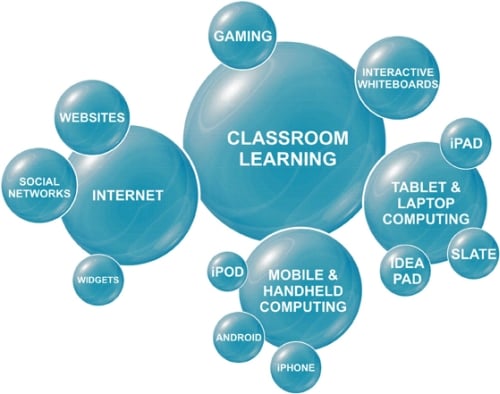
I loved Mr. Anderson's Blended Learning Cycle video! He explains how blended learning takes parts of mobile, online, and classroom learning and blends them together in the classroom. The learning cycle, which is the five "E's" (engage, explore, explain, expand, and evaluate), are also incorporated into blended learning, and you get the blended learning cycle. He refers to this blended learning cycle as QUIVERS. There are six components to QUIVERS that he uses in this class.

They are:
QU- QUestion
I- Investigation/Inquiry
V- Video
E- Elaboration
R- Review
S- Summary Quiz

Mr. Anderson begins every lesson with an engaging question. He then allows his students to experiment with the question to form their own questions. Next comes video. This component of QUIVERS is where students watch videos to learn more information about the question, and then they expand on the topic they are researching. In the review step, Mr. Anderson meets with the students in groups or individually and asks them questions to see how they are comprehending the material. When he feels they have learned the needed material, they are given a summary quiz that tests them on the other five components.

I have discovered this week that Mr. Anderson is 100% right when he says you need to start out with a good question to get the students engaged, and then let them investigate. This week in my preschool class, we did a science experiment to see what happens to water when you put it in the freezer. I filled gloves with water, tied them, then sat them aside while I talked to the kids. I asked them what they thought would happen if we took water and placed it in the freezer. Most of them said it would just turn cold, but none made the connection yet that it would turn into ice. I then gave each child a water filled glove and let them play with it for a while. We talked about how it felt and how it didn't really hurt when we slapped people with our glove in the face (that part was not something I had planned on talking about but it happened). We then walked down to the kitchen and put our gloves in the freezer. The next day, we went and got our gloves out of the freezer. They were in complete amazement that the water turned to ice. We then left our gloves in the sun to see what would happen if the ice got hot. Once we came back a couple hours later and saw it had melted, I began reviewing with them. I asked what happens when water gets really cold and then gets hot again. They could tell me everything I asked. They even told their parents about it when they got picked up! I could tell that they fully understood the basic concept I was trying to get across to them.
blended learningThis experiment I did really reminded me of Mr. Anderson's QUIVERS method. While I did not have my students watch videos or take a quiz, I did start off with a question to get them thinking and then I let them investigate that question with hands on experience. It went better than any other activity I had tried to do with them. I could have told them what happens to water when it gets cold then hot again, but by letting them experiment with it themselves, they got to see for themselves what happens. In turn, they understood the lesson better and therefore actually learned the material. Mr. Anderson definitely has a good learning method to use because if it will work for two year olds, it will work for any age! I will definitely use the QUIVERS method with my future students!

Sunday, April 14, 2013

Blog Post #12

Create Your Own Assignment


I thought long and hard about what I would like to do with this assignment. I considered what I would like to do personally, but I also put myself in an administrator's shoes and tried to think of what I would like to read about on my EDM 310 students' blogs. I kept coming back to something one of my C4T teachers did. Josh Stumpenhorst dedicated a blog post to the 5 things he knows as a teacher. I personally really loved this post and thought it would be a fun thing to do on my own.

So here it is!

Part 1: Assignment

Read Josh Stumpenhorst's blog post 5 Things on his blog Stump The Teacher. After reading his 5 things, think about your area of speciality and write about your 5 things. Follow the requirements in Writing A Quality Blog Post.

Part 2: Do It!

Josh Stumpenhorst wrote the 5 things while he was doing a project in NYC with the Pearson Foundation. He states the 5 things he knows as a teacher. After reading his five things, I have decided on the 5 things I know as an elementary education major. And here they are!


The 5 Things I Know about Elementary Kids


1. They are children... so let them be children.

kids playingIn today's school system, kids are expected to sit quietly and still in their seats, listen to a teacher lecture, and comprehend everything all day. They are pretty much expected to just be little robots. Kids cannot be expected to perform this routine daily. I mean, they are children! They want to go out and play and have fun. I've been to a school in my hometown and recess there has been cut down to about 15 minutes a day. That is completely ridiculous! That's not enough time for kids to get energy out. Then the teachers wonder why they have such problems getting their students to be still and pay attention. We have to remember that these are elementary kids we are talking about- not adults. Don't try to pump them so full of knowledge that you take away the only time during school that they get to act like a child. I wholeheartedly believe that if we allowed our students more time to simply let them be children, it would help tremendously in their grades and attention spans.


2. Don't kill their imagination- encourage it!

imaginationOne major thing I have noticed about teachers is a lot of them are so focused on getting their students to see things the "right" way. They don't let their students imagine things; instead, they tell the students how it is. Creativity is crucial for child growth and learning. Let them come up with stories and adventures and don't discourage them no matter how off the wall the story is. If they want to be a carrot when they grow up, let them believe they can be a carrot! I think the ability to imagine things is one of the greatest things a child can do. I mean, if you think about it, every great thing a person has accomplished had to start out as that person imagining it. People imagined going to the moon, and they did. There are many great singers would as a child always imagined being up on a stage one day, and it happened. Imagination and creativity easily leads into great potential. One day, maybe a student will take all the stories he or she has come up with in his/her head and become an award winning author! One thing I really want my students to remember about me is that I NEVER put a damper on their dreams. Instead, I constantly encouraged them to think outside the box, imagine the "impossible", and encouraged them to achieve it!


3. Don't try to conform them to what you think they should be.

stereotypes

I guess it's an age old tale- girls play with flowers, boys play with bugs. Girls are always to be clean; boys are nothing but walking dirt. This mindset can really hinder children. It's obvious that the majority of elementary teachers are women. While I see absolutely no problem with female teachers, I do see a problem with them labeling somethings as "nasty". There have been WAY TOO MANY situations that I have seen teachers discourage their students (girls and boys) from playing with bugs or getting dirty simply because they view it as gross. Teachers have a huge influence on their students. I mean, I remember being in elementary school and wanting to be just like my teacher. If kids are constantly told "that's gross", "that's what boys play with", "thats girly", or any of stereotypical comment, they are going to grow up with that mindset. What if one of those children has the potential to have a great career in a field that deals with insects or reptiles? What if a child who is very interested in others' cuts and scrapes has the potential to become a great surgeon? By telling them not to do something simply because it's nasty is going to make that child grow up with the mindset that what interests them is disgusting, and they won't pursue their interests anymore. Also, that simply just is making boys act girly. Boys (and some girls) are drawn to finding bugs and rolling around in the dirt. Let them! Don't push your views on things on them. They are their own person, and just because you don't like something, doesn't mean they shouldn't either.

4. Don't give up on them.


Children are naturally curious and eager to learn. I do not believe that any child is born dumb. However, I do believe that sometimes kids don't let on to how much they are comprehending. I've experienced times in my job as a preschool teacher when I thought I wasn't teaching well enough, and they weren't understanding anything. Just when I was about to throw my hands up and give up, they decided to show me just how much they understood the material. So just remember: just because they aren't spitting it back to you verbatim does not mean they aren't comprehending what you are teaching.
never give up

5. Have random dance parties!

dancingI saved the best for last! Kids love to dance. The beautiful thing about being young is that for the most part you don't care how you look. Kids don't notice if they aren't good dancers; they just notice they are having fun. I love having random dance parties with my preschool and Sunday school class. Not only does it give them a chance to let some energy out, it also gives them a chance to see me dancing and having fun too. I think it is good for our students to see us acting silly with them. So take 30 seconds out of the day and just dance like no one is watching. It's good for the soul!


Sunday, April 7, 2013

Blog Post #11

Ms. Cassidy

Pie chart
Ms. Cassidy is a first grade teacher from Saskatchewan, Canada. In her video Little Kids.... Big Potential, she lets us have a look inside her classroom. I absolutely loved this video. When it begins, a student is at the door to welcome you into the room. On the door is a sign that reads "College Graduating Class of 2025". That really stood out to me because most teachers' doors read "Welcome to Ms. (Insert Name)'s Class!" Her sign gave me the impression that I was going to see a teacher that, although her students were only in 1st grade, prepared her pupils for the real world. And that's exactly what I saw. Throughout the video, students tell the audience the types of technological activities they partake in daily. They use everything from wikis to Nintendo DS. The one thing that really stood out and hit me in the face was THESE KIDS LOOK LIKE THEY ACTUALLY ENJOY GOING TO SCHOOL!!! Hearing them talk about how they love writing on their blogs and doing all the other activities Ms. Cassidy does with them, really made me envious of this school. I know many kids that age, and they don't enjoy school nearly as much as the kids in this video do. The kids I know view school as a place where they have to sit still and quiet at a table all day and listen to what the teacher says. I would gladly show the school officials in my hometown this video if it meant it would inspire them to change the way the school system does things in the US.

During the skype interview between Ms. Cassidy and Dr. Strange, she said two things that really caught my attention.

The first is how she goes about ensuring her students' safety while publishing their work on the internet. I would love to use blogs with my future classes, but I would be lying if I said exposing them to the internet didn't worry me. I've often wondered what measures I would take to keep my students safe because let's face it, there are some creeps out there. Technology is awesome, but there are people that use it to prey on innocent people. Ms. Cassidy gave the best answer to my dilemma: only post first names and don't post names with pictures. I don't really know why this didn't register with me sooner since for the past three months I've been commenting on student blogs, and none of them have their last name listed. Sometimes I need to be told things! I definitely feel more comfortable with trying to start a class blog knowing some of the measures another teacher takes to protect her students.

If you can't beat them..The second was her comment "you are handicapping the student and yourself by not taking advantage of the resources of technology." Before she said that particular statement, she spoke of how students and technology go hand in hand. Technology is apart of this generation's life- it is not foreign to them. I agree with her 100%. I mean, some kids show me how to do things on a computer or iPad! She also states that we cannot continue teaching kids the way we were taught simply because we are in a different world than we were in 20 years ago. While I don't believe we should rely solely on technology, I do believe it needs to be incorporated into this generation of students' learning. I fully believe that if I teach my students using the methods that were used on me, I'm doing nothing but hindering them. First of all, they are going to be bored and ultimately not listen to a word I say. Secondly, students will have to use technology in their future occupations. The way I see it is if I teach the way I was taught, once my students get to the point where they have to use certain technological tools, they are going to be as lost as a chicken with its head cut off. With the way the economy is now, finding a job is like fighting on a battlefield. My senior year I applied for a job and was asked how well my computer skills are and if I could use certain programs. My response: "I've never used that program before, but I'm a fast learner." Guess what. I didn't get the job. They wanted someone who already knew how to use those programs and how to perform certain tasks. With technology being such a huge part of everyday life, most employers don't want to take the time teaching employees how to use certain tools- they want people who already know how to. One of the reasons I decided to become a teacher is because I want to help kids succeed and accomplish their goals. If I want to do that, I HAVE to show them how to use technology. I don't want my students to be turned down when they apply for jobs because I didn't do my job and prepare them every way I knew how.


Friday, April 5, 2013

C4T Comments for Teachers #3


Teachers quote


C4T Post #1

For this C4T assignment, I commented on John Stumpenhorst's blog Stump the Teacher. I chose to comment on the post 5 Things. This blog was pretty much the 5 things he knows as a teacher. His 5 things were kids are humans and should be treated as such, creativity and curiosity are crucial in learning, we are all on a journey, change doesn't happen when we are comfortable, and growth happens through failure. Mr. Stumpenhorst went into detail about each of this 5 things in a paragraph or two for each.

C4T Comment #1

For my comment, I told Mr. Stumpenhorst that while I completely agreed with all of his 5 things, the one that really stuck out to me the most is growth happens through failure. I went on to state that I know so many parents that want to shield their child(ren) from failing. However, success can't happen without failure.

C4T Post #2

The second post I commented on was To Fix Public Education. In this post, Mr. Stumpenhorst addresses what he thinks will improve education; however, it is not what many might think. What he thinks will change public education is to start with the future teachers. He believes future teachers should intern for a year under a mentor. Too many first time teachers have the "deer caught in headlights" look about them during their first year. Also, that too many teachers are not cut out for the job and shouldn't be there.

C4T Comment #2

In my comment, I agreed with his many great points made in his post. I told him that I personally felt I would be more confident in teaching if I interned for a year and could learn all I could from a mentor. I feel this would help ease my nerves a lot. Also, I don't believe everyone is cut out for the job of being an educator. I see many students in my classes now who shouldn't be there. In the end, this is an injustice to those educators' future students.

Sunday, March 31, 2013

Blog Post #10

I'm a Papermate. I'm a Ticonderoga.


I found this comic strip very humorous. Obviously, it reflects the PC and Mac commercials that appear on tv. I personally always loved the PC vs Mac campaigns. In this cartoon, the Papermate pencial states he is less expensive that the Ticonderoga pencil, but breaks all the time. The Ticonderoga pencil admits that he is more expensive, yet he will last longer than the Papermate. If one is familiar with the Apple commercials, one can clearly see the Papermate represents the PC and the Ticonderoga represents the Mac. I completely agree that sometimes buying the more expensive item is the best choice. I have a Mac, but a lot of my friends have PCs. I can honestly say that I will never switch from an Apple computer to a PC. There is just no comparing the two. The Macs are faster and more durable. I've had my computer for three years now and have never had any trouble with it. My friends, however, are always complaining about computer problems. Although I clearly see the resemblance to the Mac vs PC commercials, I believe this cartoon can go far beyond just pencils and computers. I can see how it is an argument between paper and technology, maps and GPS, and many other things.


Why Were Your Kids Playing Games?

In Why Were Your Kids Playing Games, John Spencer creates a dialogue between a teacher and his principal. The teacher is using a game as his teaching technique instead of a lecture. The teacher had his students involved in a mock stimulation and the students were very engaged in this game. The principal, however, did not see the positive effects of this teaching style because the goal is for the students to be able to pass the remote memorization test. He stated that the kids were not doing anything educational- they were just simply playing a game. The teacher goes on to illustrate how soldiers play games and surgeons do stimulations in the learning process of their craft. Though the teacher makes a valid point, the principal still disagrees with his methods. In the end, the principal recommends a technique for the teacher to use instead of his game. However, Mr. Spencer outwits the principal and turns the recommended methods into a game.

I really enjoyed this post because I really don't think people realize how effective using games as a teaching technique is, especially with young kids. I have found that when I make things a game with my classes, they retain the information better and also are more engaged and participate more. One thing that really stuck out to me was how the principal stated "If we want students to pass the rote memorization test, we need to focus on rote memorization skills." I hate to say it, but this is how our school systems view success these days. Simply memorizing something is not going to help kids in the long run. I can easily memorize some information, but that does not mean I understand it or that I can apply it to anything. I believe we should treat our students like future soldiers and surgeons. We need to start teaching our students how to fully comprehend and apply information to build their skills, not just teach them how to repeat information back to us.

The second post from John Spencer I read was Avoid Social Networking. In this dialogue, a HR representative explains to a school staff that they must avoid any site that allows for teachers to have social interaction with their students. Although some of the teachers name circumstances that allow them to have a positive influence on the kids (volunteering at church, teaching baseball teams, family-friend dinners), the HR representative still insists that there be no interaction with the kids if it is not school related. Finally, at the end of the dialogue, the HR representative suggests that the Board might pass a rule that states teachers can have no interaction with students outside of school.

I found this dialogue hilarious, but sadly true. There was one comment left that stated " It's a shame that satire is based on reality, because I think many, many teachers have been there." I fully believe that teachers should have as much interaction with their students as possible. In many cases, kids see their teacher more than they see their parents. Some kids get more love and care from their teachers than they get from their parents. Asking a teacher to have no interaction with a student outside of school is simply cruel. What will that student think if during school his/her teacher invests time in him, yet when he sees the teacher at Walmart, the teacher acts like they are strangers? I believe that will create problems with a child's self worth which in turn will negatively effect how they act and perform in school. I loved this post, but at the same time it makes me very angry because I know this is the case in many schools. All I can say is if I wanted to pretend like I don't know kids, I would not be going into education.


Don't Teach Your Kids This Stuff. Please?

In the post Don't Teach Your Kids This Stuff. Please?, Scott McCleod argues to not let kids use technology because of the dangers they could potentially be exposed to. He also sticks his nose up at students learning to read and write things on the internet. Towards the end of the blog, he stresses once more to not teach your children these things. His reason? He states he is teaching his kids about all the things he listed and ends with the statement that he can't wait to see who has a leg up in a decade or two.

Let's be honest, the world has changed a lot over the years as far as our children's safety goes. Technology has given creeps another way to prey on children. I can see why parents want to shelter their children from all the bad in the world. However, if we shelter our kids from all the bad in the world, how will they be the good in the world? How will they recognize they are being preyed on? How will they learn the way to conduct themselves on and offline? If we want our kids to be knowledgeable about how to recognize and defend themselves from online threats, we have to expose them to the web. If we just keep them in a safety bubble, once they do start using technology, they will have no idea how to safely conduct themselves. Children are less likely to abuse the privilege of technology if parents would just take the time to educate them in it. Technology is our future. A child will more than likely use technology no matter what field he or she goes into as an adult. The longer children are shielded from technology, the harder it will be to get them familiar and comfortable with it.

Dr. Scott McCleod is one of the nation's leading academic experts in K-12 school technology issues. He is currently serving as Director of Innovation for Prairie Lakes Area Education Agency 8 in Iowa. He is also the founding director of the UCEA Center for the Advanced Study of Technology Leadership in Education (CASTLE) and co creator of the Did You Know? series.

Friday, March 22, 2013

Blog Post #9

Mr. McClung's World

Mr. McClung

I really don't know what to say about the posts from Mr. McClung except for WOW! A lot of the topics he posted about really caught my attention mainly because they were things that relate to me. He said numerous things that made me think, "YES!" because I've been in the same situation he was speaking of, and I know exactly what he meant because of it. I found myself picking out so many of his points to talk about that I considered that I may have picked too many. However, when I went back over his posts to decide on a couple to write about, I found myself getting upset because I couldn't decide which ones were "good enough" to put in this post. So, I apologize for the rant I am about to go on, but there are simply too many great points that he made that I can't pick just two!

The first post I read of Mr. McClung's was Version 4 Post (2011-2012). His first point reflects on the anxiety he suddenly felt about how his peers view him as a fellow teacher. Do they approve of the way he handles things? How do they view him as a teacher? He writes about how he found himself extremely worried about his peers views on him- something he has never worried about before. He then goes on to explain how he has only ever really worried about how his students and superiors view him. He states, "The truth is I have gotten to where I am in my career by following one rule, and that is are the kids having fun? Worrying about perception of adults has never done anything positive for me, but making sure that my kids are taken care of and enjoying class has done wonders for me." I love this statement. I won't lie, over the past few months I have worried about how other teachers will view me when I'm not only in their room student teaching, but when I'm in control of a class of my own. When I go shadow teachers at a school, I can't help but think about the years of experience they have and how I will have none. Will I do things right? Will they view me as just an unprepared newbie who has no idea what she is doing? Suddenly, I found myself really nervous about this, and I even second guessed whether I really wanted to go into education. I caught myself comparing myself to these teachers and thought, "I don't know if I can do this." While reading Mr. McClung's post, however, it hit me. I'm not teaching my fellow teachers- I'm teaching my students. My fellow teachers aren't the ones I'm trying to ignite a passion for learning in- it's my students. Also, I want to be the teacher every parent wants their child to have. I want my classroom to be the classroom that all the parents request their child be in. That's not going to happen by worrying about what my peers think of me. That's going to happen by how I interact with my students. So, in all this post really helped me to shed that worry.

number one teacher

In his post about the 2008-2009 year, Mr. McClung speaks of how we have to be reasonable with our students. We can't get down when they don't live up to our expectations because, after all, they are just children. We can't scold them for them for not coming through for us. We have to pick them up, dust them off, and encourage them so more. This lesson proved true for me this week. I teach a 2 year old preschool class. The main thing I try to teach them are their ABCs (how to recognize, write, and sound out the letter) and their 123s (how to write,count to the number, and recognize the number). In the past few weeks, I noticed I have been getting very aggravated with my kids because when I ask them what a letter is, they just shout out the first letter that comes to mind, which for some reason is always either G or T. I really developed the mind frame of, "they aren't really getting it so I'm just going to let them do their worksheet and not harp on it anymore." For about three weeks my frustration grew with each class. However, they really stuck it to me Thursday. This week we went over the letter W. Like always, I held up a picture of the letter W and asked what letter it is. Like always they said T and G. Thursday I decided to take them out in the hall, and at my church on the preschool hall, we have big pictures with writings on the halls that talks about creation. I lined them up in front of one of these pictures and asked them to find a W. And they did! In fact, they found all the W's on every picture on the hall! I was shocked, really. So, to add to Mr. McClung's advice, don't scold your students for not getting something because maybe, just maybe, they are comprehending more than they let on.

And Mr. McClung did not stop there!

In Mr. McClung's 2009-2010 reflection, he gives the advice to find a school mom. Find someone who has been there a few years and can show you the ropes and vouch for you. This is AWESOME advice. I teach numerous classes at my church, and I have a church mom (Belinda). I go to her with every new idea I have, and she helps me make that idea a reality. She is in charge of the preschool department, so having her on my side really makes every plan I have way easier to fulfill. Also, she brings to light things in my plans that I haven't thought of. She is the one I always go to for guidance, and a great relationship has been built between us. Through her trusting me, all the other church staff trusts me. Mr. McClung isn't just talking to hear himself talk when he says get a school mom. It really is one of the most beneficial tools not only a new teacher can have but any new employee in general.

Don't expect others to be as excited about change as you are. This is a lesson that I have been having to deal with myself lately. At my church on Wednesday nights, we have two classes for preschool aged children. One is Mission Friends where they learn about missionaries. The other is Little Praisers where they sing songs. Quite frankly, the classes are boring. All the kids do is come in and do a craft and sing. It's the same thing over and over again each week. However, when I talk about changing the curriculum to something more energetic and enjoyable, I get noses stuck up at me because we have to go by the book or we will die. We've been going by this book's curriculum for 25 years and we can't change it now! Just like Mr. McClung says in his 2010-2011 refection, there will always be those people who say, "This will not work." I'm much like Mr. McClung. I'm very open to new things especially when the old way of doing things is no longer working. I love how Mr. McClung says to not "allow others to stifle your own excitement and joy that you experience in teaching or any other facet of life for that matter." I've developed new ideas for Mission Friends and Little Praisers and have had them rejected by the teachers. It sucked. I was really excited and just figured they would be too. Yet even though they aren't, I refuse to let them ruin my excitement for my new ideas. Change is a necessity, and when the time comes that those people realize that, I will be standing there jumping up and down with my new ideas and encouraging them to come up with some!

So, that's my rant. I think I will have to have venting sessions like this more often. Blogging about yearly reflections is definitely on my list of things to do when I become a teacher! Not only is it a good way to be able to look back on your years of teaching, but it really can help future teachers. I feel like I will more than likely start my yearly reflections this year with my preschool class! I mean, why wait?

A good teacher's influence

Sunday, March 10, 2013

Blog Post #8

This is How We Dream

The videos by Dr. Miller, This is How We Dream Parts 1 and 2, pretty much just reemphasized the views I already have on learning. Throughout the videos, Dr. Miller stresses that teachers don't need to just teach through reading and writing informations, but through videos, audio clips, presentations, ect. as well. Visual and auditory resources can be better learning tools for students than the boring, everyday method of reading and writing everything. I feel this gives students a much needed break. It also provides diversity in the classroom, and that diversity will prevent the students from becoming bored and uninterested in school. Also, I think it is important for educators to realize that not all students learn the same. Yes, some learn effectively by reading and writing the information. However, some students learn better by having a visual or auditory aid. Using multimedia is a great way to cater to all the students' needs.

I love the idea of collaboration while producing videos and multimedia. I believe educators should work with other educators, whether it be educators in the same school or educators on the other side of the world, to develop new ideas for helping students learn. Surely of all the teachers in the world, one of them has come up with an effective way to teach students about a particular subject. Educators can rely on each other for new ideas and insights, and also how to produce these videos and media presentations.

I feel it's important to incorporate as many different resources and media as possible. Like I previously stated, reading and writing everything everyday can get boring; yet, watching videos every day can too. Teachers should be able to develop a curriculum that uses an equal amount of each. Teachers should approach each lesson in a different way so students can be exposed to different types of learning.


Carly Pugh

In her blog post, Carly writes about ways to get students more interested in the teachings. I thought this post was amazing, and her ideas were magnificent. Two of her statements really stuck out to me. The first was "I know it's a long shot, but someone needs to push kids and make them think, what if they were the next Steve Jobs or Einstein or Arnold Schwartzenegger the Governator, even?". I'm a firm believer in pushing kids to their fullest potential. All children are capable of being great, but without someone there to encourage, challenge, and motivate them, they will slowly just settle for ordinary. I want to treat each of my students like he or she is the next big thing. The second statement I really enjoyed was, "Not everyone loves to read as much as I and some others do, maybe it takes getting them interested in the story and the characters, and then the words that paint that picture". I personally LOVE to read, and I honestly get really annoyed with people who don't like to read. If I find a good book, I want to share it with others. So when I come across someone who simply doesn't like to read, it gets to me because I know what they're missing. For that reason, Carly's statement about getting people interested in the story and then the words really stuck out to me. It changed my way of thinking. I feel I have really gained from reading her post because of this one statement. She has shown me a different way to handle those people and ultimately my future students.

To get students engaged, one has to use something engaging. With the tech saviness of today's world, there is nothing more engaging than media resources. In my opinion, Carly Pugh did a great job expressing this and giving resources to use in her post. I really enjoyed how she included more information that one would generally give. The vastness of the information allows for one to definitely find a video that suits him or her. Dr. Miller would be very impressed.


EDM 310 is Different

I absolutely loved the videos for this assignment. They were so humorous and really had me engaged the whole time. Although I loved the Chipper Series and EDM310 for Dummies, I can honestly say I don't really know how they feel. I've actually really enjoyed this class and never felt overwhelmed with the work. I've surprisingly caught myself several times eager to see what the next blog post is going to be about. Yes, at first the amount of time I had to put into EDM 310 was nerve racking, but by the second week I wasn't too worried about it. This class has allowed me to start writing and thinking for myself again. For three years I've majored in biomedical sciences. You can't really think for yourself and come up with your own ideas in the subjects of that degree because it's either this certain way or you die. It's refreshing for me to be able to come up with my own conclusion about something rather than having to know the conclusion that has to be made or I am wrong. I also think a lot of the reason I haven't thought this is the class from hell is because I've already been in those classes! I would rather do a blog post than physics or chemistry homework any day!

I really liked the Chipper Series. The moral that I really took from it was you have to take responsibility for your own future. Your success depends on no one but yourself. You aren't always going to have a teacher holding your hand every step of the way, and that is one concept I don't believe students understand. They depend solely on the instructor for everything and don't learn how to take things into their own hands. It really makes students lazy. The Chipper character portrayed this extremely well in this series. She went from being in school to being a garbage lady simply because she didn't take the initiative to do things for herself. The real world was hard for her because she was never taught to be responsible. I hope every student who watches this video gets a lesson out of it.


Learn to Change, Change to Learn

In this video, the statement is made that in this day and age, children do not learn just at school but in many places. These places giving children information can range from the home to communities to the internet. School should be a place where students can validate all this information and learn how to use it in the real world. I cannot agree more.

The truth is, most students know how to use a computer better than adults. Also, we live in a technological world. One cannot escape it, and it is only going to get more technologically advanced. With that being said, educators have a duty to teach their students how to use this new way of learning. They need to show their students how to use a computer as a resource for finding information rather than simply as a way to update a Facebook status. As an educator, it's your job to teach your student how to not only succeed in your class, but also how to take that information, apply it, and succeed in future tasks. If educators don't start teaching their students how to succeed in technology, they are failing as educators simply because no matter what profession those students go in, the chances of them being required to be technologically literate is greater than not.


Scavenger Hunt 2.0

scavenger hunt

Edmodo

Edmodo is a social networking site for teachers and students. All I can say about it is WOW! It's set up a little like facebook is, and I absolutely love this site. I signed up as a teacher and clicked the 'Discover' tab once I got on my homepage. From there, I started exploring and typed in human anatomy. Tons of resources from science experiments to digital models of the body came up. I looked through some of them and they were all very interesting. I will definitely be using this site! You can follow other educators and see what resources they are using as well. I'm very glad I found this!

edmodo logo

Animoto

I chose this video tool because it seemed like an easy and fun tool to make videos without being very time consuming. I feel using videos to teach can be very beneficial because it gives kids a break from the books. I watched some of the videos provided about ways teachers are using Animoto in their classrooms, and I loved them! Animoto automatically analyzes music, pictures, ect and orchestrates the video for you. This allows for the teacher to focus on how he or she wants to present the video which takes a lot off the educators plate. It seems like a very useful resource!

Poll Everywhere

I created a poll using Poll Everywhere. It was really easy. All I was required to do was enter the questions and how I would like for the answers to be set up. It's a quick and easy way for teachers to create and share polls.

Tuesday, March 5, 2013

Summary of C4T Comments #2

blogging audience

Summary of C4T #1

My C4T was to comment on Larry Ferlazzo's blog. Mr. Ferlazzo's blog posts are full of useful websites pertaining to anything one can think of. For my first comment, I chose to comment on his post National Grammar Day Resources. This post was full of websites dedicated to grammar practice. There were sites that offered games, quizzes, audio feedback, and more.

Summary of my comment

I found this blog very useful. I haven't had grammar practice since I was in high school; therefore, this was a great refresher for me. I also found this list of sites beneficial for me as a future educator. I was very grateful for his resources.

Summary of C4T #2

My second comment was on Larry Ferlazzo's blogpost Easily Make Animations with Sketch Star. This site was full of games that allows kids to use painting to get practice with shapes, drawings, ect. It really seems like something young children will enjoy.

Summary of my comment

I played on Sketch Star for a little while and absolutely loved it. I told Mr. Ferlazzo I know so many young kids who will love this program, and I can't wait to share it with them. I thanked him for posting the link, and I plan on exploring the program more over the next few days.

Sunday, March 3, 2013

Blog Post #7

Randy Pausch Last Lecture: Achieving Your Childhood Dreams

Randy Pausch

First off, I would just like to comment on how big of an inspiration Randy Pausch is. He is such a gifted speaker, and I wish I had had the opportunity to attend one of his lectures. He really knew how to engage his audience and keep their attention on what he was saying. His use of humor and relating things to his own personal experiences really helped keep me focused on the video instead of daydreaming or halfway listening. I found myself not even aware of the time, and the video did not seem like it was over an hour long. I hope one day to be half the speaker he was.

In this video, Randy Pausch focuses a lot on childhood dreams. He states some of the dreams he had growing up, and recounted stories on how they played out during his life. He spoke of how he accomplished these dreams (or didn't accomplish) and the road it took to fulfill them. The journeys he took to make each of his dreams a reality were truly inspirational. He then goes on to tell how we can help others accomplish their dreams.

One thing that really stuck out to me in this lecture was his quote "brick walls are there for a reason: they let us prove how badly we want things." I absolutely love this. So many times people think that because something didn't work out for them, that means they need to give up and find something else to do. That's so far from the truth. Brick walls should motivate us. They are a driving force to make us work harder to achieve the goals and dreams we have for ourselves. I do agree with Mr. Pausch in the sense that brick walls are needed to stop the ones who don't really want what's behind that brick wall. If no one ever hit a brick wall on his/her road to success, there would be tons of people in fields who simply do not have the passion for what they are doing. I believe there is a difference in wanting something and having a passion for something. Everyone can want something, but it takes passion and dedication to get that something. Passion is what makes us work hard and put all of our time into something. People passionate about their jobs are the people who are most successful. I personally love when I come across a brick wall. Like Randy Pausch stated, brick walls let us prove how badly we want something. I always know if I truly want something or not because when I hit that brick wall, if I can simply shrug and say "oh well" and give up, then I obviously didn't want that something enough to work for it. But for those things I want more than anything, I strive to bring down that brick wall. And when I do, there's no greater feeling in the world.

Another thing that really stuck out to me was how Mr. Pausch stressed to look for the good in people. Countless times he stated to never give up on someone because eventually they will surprise you. I value this advice. I believe as educators, we should never give up on our students. I know some kids are hard to handle and seem like they don't care; however, maybe that kid sitting in the back who never talks is the next Steve Jobs. Sometimes all kids need is encouragement and someone who expresses that he or she care for them and wants them to succeed. I also take this advice outside the classroom. I have personally had contact with people who were just hateful (for what reasons I do not know). However, I never repaid hate with hate. I always tried my best to be nice and see the good in them. Eventually, those people did come around and surprise me one day by actually being civil human beings. I can't stress how much I love this advice so I'll just say it again- "find the best in everybody; no matter how long you have to wait for them to show it."

The third thing I really enjoyed was his segment on how to get people to help you. His advice was to be honest, be earnest, apologize when you screw up, focus on others and not yourself, and to realize you can't get somewhere alone. Throughout his lecture, I noticed he always had someone to help him. He had an awesome career but he always had to get help or approval at some point. When he got that help, he always gave back by helping his students. It seemed that eventually, his dream was to help others accomplish their dreams. He always raised the bar for his students and pushed them to do better. He truly seems like he was a great mentor, and I hope his legacy will encourage other educators to be the best they can be.


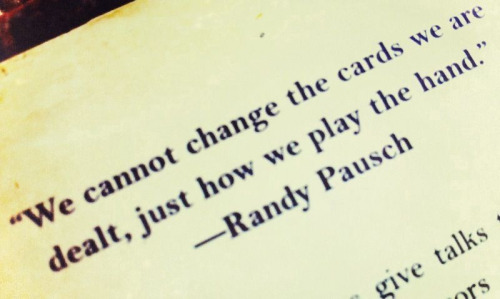
the cards we are dealt quote

Saturday, March 2, 2013

Project #9- PLN Progress Report

Personal Learning Network

Prior to EDM 310, I didn't know what a personal learning network was. However, after seeing the positive effects of having a PLN, I've been developing one of my own. It's still in its beginning stages, but I've already found myself relying on it more and more.

I teach a 2 year old preschool class, and I've been looking for new tracing worksheets to use with the kids to teach them to write their ABCs and 123s. I've come across quite a few stay-at-home moms' and teachers' blogs that post all kinds of fun worksheets to do with kids to help their writing. I've been using them for the past two weeks and I can already tell a difference in my students penmanship! My excitement prompted me to continue searching, and I have found numerous more blogs with activities to use with preschoolers.

My PLN also includes Twitter and Pintrest. I follow educational inspirations like Krissy Vensodale on twitter, and I have special boards on pintrest dedicated to children.

My PLN definitely needs some work, but hopefully by the next progress report it will be expanded to twice the size now!

#1 Summary of C4K

kid blog


Summary of C4K #1

For my first C4K, I was assigned to comment on Jackson's blog post. He is a student in Mr.Cometti's 9th grade IB World History class at Robertsdale High School. I commented on his post Imperialism. In this post, he talks about what imperialism is and also the areas that were greatly affected by it. He also talks about why certain countries wanted to take over other countries. He had some humor in his post which made reading about history more enjoyable.

Summary of my comment

In my comment, I told Jackson I haven't been in a world history class for three years and his post was a good refresher for me. I had not even thought of imperialism in years before I read his post, and I had forgotten what it really was. I praised his use of humor while explaining the reasons for some countries being taken over by imperialism and wished him good luck in his class.


Summary of C4K #2

My second C4K assignment was to comment on Nicholas' blog for Mr. Sapia's class. In his post, he talks about the homework Mr. Sapia assigns. He stresses the fact that sometimes his teacher doesn't assign homework because he feels it is important for his students to have time to be kids and not spend all their time on homework. However, when he does assign homework, he tries to make it enjoyable. Nicholas states some of the computer homework assignments and what his favorite homework games are. He also states that he is aware the homework Mr. Sapia is assigning is beneficial to his learning.

Summary of my comment

I told Nicholas I was thankful he listed some of his favorite homework websites because I found it beneficial for me as a future teacher to know what types of homework kids like and actually enjoy doing. I loved reading his blogpost because I could tell he really has respect for his teacher, and I want my students to feel that way towards me. I encouraged him to keep up the good work and wished him well with his homework assignments!


Summary of C4K #3

My third C4K was to comment on Te Puawai's blog for Miss King's class. Te Puawai is in year six at PT England School. From her blog, I can tell she likes the outdoors. In her post she talked about how during the first week of school her teacher took her class on a walk around Omaru Creek. She loved this adventure because she was able to see wildlife such as tadpoles and all kinds of plants.

Summary of my comment

In my comment to Te Puawai, I told her how much I enjoyed reading about her first week of school. I also said how I wish I would have been able to take nature walks like her class did when I was in school. I related to her because I love walking around creeks and pond and observing the animals in plants that call the land home. I wished her good luck in her studies and told her that I hoped the rest of year six is as great as the first week was.


Summary of C4K#4

My final C4K for February was to comment on Delicia's blog for her 10th grade English class. Her post is a summary of a story she has read about a girl who lost all of her friends. She feels alone and like she doesn't belong anymore. The girl hides in a closet because she felt the closet was like her in a sense that it too had no purpose or name.

Summary of my comment

I found this story a little sad. I commented on how unfortunately many kids (and adults) feel the same way the girl in the story feels. I asked her the name of the story she was blogging on so I could read up on it. Finally, I wished her luck in her English class.

Project #8 Podcast (Video)

Saturday, February 23, 2013

Project #10 Finding the Right Tool

The grade I plan on teaching is kindergarten. Considering the age of my future students, I honestly didn't think I would find anything technological to do with them besides ABC, 123, and shape games that would be used on a smart board. However, after about ten minutes of searching, I found myself on mackiev.com. I looked through all the tabs and finally settled on the Kid Pix 3D portion of the site. I was very intrigued by this video tool. The Kid Pix 3D tool allows children as young as kindergarden to create and share stories they've written in class. They can create a video to illustrate their story and can also record their voice to narrate. And did I mention the videos are in 3D? I found this to be a great idea and decided to watch some of the stories provided. The first came from a 5 year old and her fluency astounded me. Kid Pix is beneficial to kids in so many ways. It allows for kids to use their imagination to write and create stories, but also through the narration they are strengthening their reading abilities. I explored some more and found a short story done by a 3 year old! I feel young students would love something like this because they are always eager to create their own things. I can't wait to see what stories my students will create! Knowing me I probably won't be able to wait and will try this website out on my Sunday School class or kindergarteners at my church!

Kid Pix 3D tool

Friday, February 22, 2013

Blog Post #6

networked student

The Networked Student

My initial thought while viewing The Networked Student was, "This is a really cool way to construct a presentation." I really liked the layout of the video. The hand-drawn pictures that were used to help tell the story really kept me focused on the video. It was a good break from watching power point presentations, and I salute Wendy Dexler's creativity.

Although I found the design very interesting, I'll admit I had to watch the video a couple times to understand what was being presented to me. However, after watching the video again, I realized how the topic of the video (connectivism) is how this EDM 310 course is mainly set up. Connectivism allows students to become self-motivated learners while the teacher aids in helping the students to take the information they've found and decipher the reliability of it. This way of learning encourages students to explore networking sites such as twitter, blogs, ect. to learn things from people outside of the classroom. In turn, if students can also share their knowledge of things with others as well. Another positive effect from connectivism is that it allows students access to some of the most educated professors and speakers of all types of subjects through podcasts. With this style of teaching, students are able to take learning into their own hands and find what was best suit them, yet the instructor is still their to guide them in this process and clear up confusion.

I think connectivism is really beneficial for older students. I actually wish I had been exposed to it prior to college. While I was in high school, I wasn't made to learn things on my own. I was completely dependent on the teacher when it came to my education. I had a really hard time when I started college because I realized that I didn't know how to teach myself material, and I definitely was not aware that I could simply download a podcast from another professor if I did not understand my professor's style of teaching. It is a lesson I wish I had not had to learn the hard way. After being exposed to the blogs and videos assigned in this course, I've learned that the resources to anything I wish to learn about are limitless. I believe teachers should help their students to become self-motivated learners and guide them in how to take steps to learn things for themselves. Why? Because a student isn't going to always have his/her teacher there to hold his and tell him how to do things, and they need to learn that their knowledge of material is their responsibility to obtain.


Welcome To My PLE

I really enjoyed the tour of this 7th grader's PLE in Welcome To My PLE. I learned that a PLN is all about communication with other people throughout the world and using those resources to further one's knowledge about things they do not know that much about. It was very fascinating that by this student's professor giving her the responsibility to find her own resources, she was able to talk with experts of the topics she was researching about. I feel like I would have loved projects in school way more if I had been able to talk with someone who specialized in what I was researching rather than just gathering my information from a textbook.

With that being said, I personally don't feel I have a PLN. I've been trained to rely on textbooks for all my research needs. Up until this class, I had never read others' blogs or watched lectures to get a more diverse view on material. I've found that when I read some blogs, the authors make points I had never even considered prior to reading the blog or watching the video. What I found to like most about PLNs is the community that comes with them. Not only am I exposed to new information, but I'm also able to help others with material that I'm more knowledgeable with.

I also would like to comment on the way this 7th grader organizes her information. I must say I was a little intimidated! I now know that I'm not as organized as I thought!

benefits of PLN

Saturday, February 16, 2013

Blog Post #5

If I Built A School

Krissy Venosdale is truly sensational! She's the perfect example of how a teacher should be, and the ideal role model for future teachers. Just from skimming through her Venspired blog, I could tell how much she loves her job and takes her work with her students seriously. I read a few of her post, and before I knew it, I was looking under every single tab of her site. Two posts really stood out to me. The first was "It Might Be Today". In this post, she talks about all the things of life that flood our lives and can sometimes make us feel overwhelmed. Then, she enters her classroom filled with children and all those things disappear for the time being. This really hit home with me because while I was reading her post, I thought "this is exactly how I feel". It amazed me that someone I had never even heard of before this assignment was able to put what I was also feeling into words (something I have never been good at). After reading that, I wanted to continue reading. The next item I came across was a picture she uploaded under Teacher Confession Tuesday. It states how she called her students "her kids" because they leave such a huge impression on her heart that they aren't just her students. In a way they are her children. I'm really involved in the children's ministry at my church, and I refer to every one of those children as one of my own kids. I'm happy to know I'm not the only person who does that!

Ms. Venosdale's post If I Built A School is the most far fetched dream of a school that I have ever heard of; however, it's the ideal school. A treehouse in the library? That's one of the most creative decor ideas I've ever heard. But she doesn't stop there. She goes on to tell how she would have the cafeteria a cozy area, a science lab for all sorts of experiments, and a bus on call for year round field trips. And then there's my personal favorite- a child's grade level would depend on their readiness and ability, not their age. This school doesn't seem like a dream come true for only students but teachers too. To have resources to use with your students and a more relaxed and fun work environment is any teachers dream. All I can say is that when Krissy Venosdale builds her school, I will be applying for a job there!

After reading about her dream school, I thought of what my dream school might be like. I would try to have something for every student to succeed in depending on his or her natural abilities. The arts would be something that would be very encouraged. There would be an art and music studio (separate from each other) where students can dive into their artistic and musical abilities whenever they wish. There would be a science lab with an unending cabinet of supplies for any type of experiment you can think of. The cafeteria would be more like a food court than a line that serves one thing. Students could have a variety of meals to choose from and then could choose to sit at a booth instead of a hard table with hard chairs that's the farthest thing from comfortable. There would be no desks. Students would sit at a table and learn how to work together on things. There would also be no tests (whoop whoop!). Instead, students would be graded on if they can apply the material and prove they truly know what they learned instead of just marking a simple a,b,c, or d on a piece of paper. Students could move up to the next grade level depending on their knowledge of what is being learned. No one would be held back simply because their birthday says they are to be in that particular grade. Recess and PE would be a must. Too many schools try to keep children in a classroom all day, and that simply does not work. After all, they are children; they need to have time to play. Classrooms would be colorful and vibrant instead of white cement walls that feel like a prison. Teachers would get paid the amount of money they deserve! After all, they are the ones investing their days taking care of and educating our children; therefore, they should reap more benefits than how they do now. This may just be a dream, but I'm a full believer that dreams come true. Every successful thing started out as a dream- who says I can't make mine a reality too?


Eric Whitacre's Virtual Choir

After watching Mr. Whitacre's virtual choir I was completely amazed! It's astounding how someone can take videos of people all around the world singing and put it together to make one huge virtual symphony. When I first read Jennifer Chamber's post, I'll admit I was a little skeptical. However, after watching the performance, I wish I could have been apart of it! It's truly amazing what technology can do. Before this video, I would have never thought someone could put together something like that. The assignments in this class are really good at proving me wrong!


Teaching In the 21st Century

In John Strange's version of Kevin Roberts' video Teaching in the 21st Century, Roberts stresses the point that teachers need to be teaching skills instead of just facts and contents. In today's world, students have all the information they could ever dream of gathering at their fingertips. Teachers are to be the filters. They are suppose to teach their pupils how to apply this information and use it in the real world.

I completely agree with Mr. Roberts. Teachers aren't the only source of information, and it would be ignorant of people to think children learn everything they know at school. Students can discover whatever information they want on google, but google isn't teaching them how to analyze the information for accuracy and showing them how to apply it to the real world. That's where teachers come in. We need to be teaching our children skills and ways to use information they find on the internet, or they will simply be beings with a bunch of information they don't know what to do with. I know many teachers view technology as the enemy, but realistically speaking, there is nothing they can do to stop it. So instead of blocking it out of the classroom, why not use it to your advantage and have kids learn from it. I'm speaking from experience that when working with younger children, you HAVE to make everything into a game. Why not download a game to the smart board that's relative to the material being learned in class and have a day that students can play that game and reinforce the material being learned? I know teachers would be surprised at how much faster the children catch on to the material.

I do believe we need to change the way students view technology. Yes, it is very entertaining, but that's not all it is. I really enjoyed the segment of the video that contrasted entertainment and engagement. Kids already love technology and want to play with it, so why not use it as a way to engage your students in material that's being taught in the classroom. Students would more than likely be more open to participating if they know they are going to be doing something on the computer, smart board, ect.
double standard cartoon


Flipped Classroom

I think flipped classrooms are an awesome idea! A few weeks ago, I shadowed a teacher in my hometown. She asked me to help her out a little and grade some assignments for her, and I was completely blown back by how low some of the grades were. In a way it made me really mad that the majority of the students did so poorly. I went on to ask her what the problem is. Why are these students not comprehending the information? Her response- there is not enough time. She has one hour and fifteen minutes with each class to teach two subjects. That's not enough time to properly cover the material the students need to learn. Flipping classrooms is a great way to solve this problem. Because time is limited, if students watch the lectures online before class and become familiar with the material, when they get in class the teacher will have more time to answer questions. The time she/he would spend lecturing and answering questions, could simply be just question time. It would also give students more time in class to practice that material being learned.

Yes, you run into the problem with students not watching the videos at home. But I agree with Ms. Gimbar that once those students see the rest of the class engaging in group activities, they are going to want to be apart of that and not at the computer watching the videos. It might take some time, but I think eventually the change of atmosphere in the class will motivate all the students to watch the videos beforehand.

I personally see this method of teaching as an answered prayer. I feel that if students are behind and not grasping the material, the teacher should take whatever means necessary to change that. It's their job to do that, and I will be recommending this method of teaching to that teacher I previously spoke of. flipped classroom

Sunday, February 10, 2013

Project #5- Google Presentation

Blog Post C4T Comments for Teachers

C4T Post 1

For my first C4T assignment, I commented on Dr. John Strange's post entitled Facts. In this blogpost, Dr. Strange brings to light that facts are irrelevant. He begins his argument with an encounter he had with a member of the New Jersey State Board of Education who informed him the Board was insisting students learn important historical facts and dates. Dr. Strange then goes on to ask him questions about dates in our history that anyone could make his or her own argument about when they occurred. He then states his opinion about why facts such as these are unimportant, and why we should be skeptical of these so called facts and focus more on why these things in history happened. Dr. Strange really understands that many facts are not reliable and that educators should teach their students how to research for evidence regarding such questions.

In my reply to his post, I told Dr. Strange how I experienced learning different "facts" regarding some subjects throughout middle and high school. With each history class I took, I was told a different "fact" and that the "fact" the previous teacher taught me was completely wrong. Eventually, I just learned what the instructor wanted me to learn just to get a good grade on the test. I also commented that I don't remember the majority of the dates I had to learn while in those classes. Overall, I really enjoyed Dr. Strange's blogpost regarding facts, and it refreshing to know that an educator recognized the unreliability and irrelevance of some of the things students are being made learn.

C4T Post 2

For my second C4T assignment, I commented on Dr. John Strage's Competence and Accreditation blogpost. In this post, Dr. Strange talks about his recent experience with the SACS regarding his qualification of teaching EDM 310 at the University of South Alabama. He had to gather his own materials that he viewed would meet the SACS standards to show he is qualified to teach. He attempted to submit all his documents electronically but was told he had to print them. Two days after approval, he was told he had to submit everything electronically. He goes on to state why this burden should not have been placed on him, and why his teaching qualifications should have been handled differently.

In my response to this post, I agreed with Dr. Strange with his complaints. The University should have been responsible for providing qualification documents since they are the ones who hired him. Also, it was pretty absurd to me that an individual needed to provide proof he's qualified to teach a course he invented. There is no one more qualified to teach the course than the inventor!


Friday, February 8, 2013

Blog Post #4

world podcasting

Podcasting

I found all the podcast posts on the Langwitches blog very interesting. I had never put much thought into podcasting before- especially not in the classroom. However, after viewing the blogs and seeing how much a podcasting project benefitted the children, my mind has been changed.

While going through the links provided, there were several things that caught my attention. The Flat Stanley project was the first. I LOVED how the instructor had the students go to the library and check out books about a location of their choosing (call me old timey, but I don't believe that just because we have the world at our fingertips via the internet, we should forget resources that can be found in a library). Once a book was obtained, the child was to go home, write down specific information about the city/country with the help of the parents, and write a script of what it was would like to visit that country. When the students returned to class, they recorded their scripts for their Flat Stanley podcast. I found this to be a great way to teach social studies. Since social studies is one of those subjects that you really have no choice but to teach from a book (unless a teacher has the courage and money to pack up the class and take them to the country being studied), I considered this podcast approach a great way to give the kids a break from the books, a hands on learning experience, and a way to show the parents and get them involved in what is going on in the classroom.

The second point that stuck out to me was in Podcasting with First Grade. The comment was "believe it or not, but having an audience matters... even to 6 year olds." I couldn't agree more with this statement because so many of the kindergarten and first grade students I know are always so eager to show you a project they did or recite something they have learned. This was really the statement that opened my mind to the idea of podcasting with elementary students. Knowing they are working toward something that someone on the other side of the world will see is exciting to a child that age. And when the author stated that the project helped to get the shy and quiet kids out of their shell, I was hooked on the idea. After reading all of the positive feedback provided about how cooperative and engaged the class was, I came to the conclusion podcasting is a great way to help teach all the aspects of learning and social interaction that a teacher hopes accomplish.

kids podcasting

The Benefits of Podcasting in the Classroom provided me with more benefits of letting my students participate in podcasting. I believe creativity is one of the most important things that needs to be encouraged in young children, and it's something I plan on trying to promote. If podcasting projects will help promote my students' creativity, I will try it no questions asked. Another benefit pointed out was it allows for differentiation and project based learning. Having a different way of learning is very important to students of all ages. If a teacher comes in class everyday and simply reads from the book and lectures, students are going to get bored with learning. Podcasting is a great way to avoid students getting that false mindset of learning. Podcasting seems to be like a good resource to help emphasize learning is fun, and I plan to have podcasting projects an often occurrence in my future classrooms. Maybe one day EDM 310 students will be listening to my first graders' podcasts!

Wednesday, February 6, 2013

Special Blog Post #1

Video from Blog Post #2

While watching the video Did You Know?, I would say I halfway misinterpreted the data. The US is behind in the international academic scores; therefore, when the video stated "India has more K-12 honors students than all the K-12 students in the US", I was deceived. I did not consider the population of the country. I just considered how America ranked in certain subject test scores compared to India. My family is close to several families that are from over seas, and all of them talk about how important succeeding in academics is in their country. Students come home and study for hours, and many of them are expected to make nothing lower than a perfect score on tests. With that being said, when I read the statistics given in the video, I came to the wrong conclusion. However, when the statement "if the learners do learn English there will be more people in China speaking English than the entire population of the United States" came on the screen, I did not misinterpret that. Every United States native knows English. I mean there is nothing else they would know unless they are home schooled in a Spanish speaking household. I thought it was common sense that China can't outrank us in our own language. I just assumed since the population of China is so much greater than America's, of course there would be more people speaking English in that country if they all learned our language.

According to WolframAlpha, the population of India is 1.21 billion, the population of China is 1.35 billion, and the population of the US is 309 million. If all the Chinese learning English do in fact learn the language, 23.56% of China's population would know English. Not even half of China's population is learning English. The number of English speakers in China is higher than America's simply because China's population is roughly 4 times greater than the US.

I conducted two other WolframAlpha searches. The first was the life expectancies of countries in the world. The top three countries with the highest life expectancies are Macau (84.4 yr), Andorra (82.5 yr), and Japan (82.1 yr). My assumptions of this data were pretty accurate and I had expected Japan to be ranked in the top five. My second search was the percentage of Christianity in the world. The result was that only 32% of the world's population consider themselves a Christian. The US was the leader in the Christian faith with 12% of the worldwide fraction and one of the lowest was Jamaica with 0.1% of the worldwide fraction. These numbers didn't upset me as bad when it clicked with me the statistics were based on a worldwide scale and not an individual country scale!


Gary Hayes Social Media Count

I was very intrigued by the media chart created by Gary Hayes. In a way I was a little blown away. I know the internet is used by people all over the world, but to see the numbers of things happening in one minute really brought it into perspective of how many people are doing the same thing in the same time frame. What really amazed me was that in 36 seconds, 124,999 photos were uploaded to FaceBook. That's a lot of photos!
Social Media Chart for 36 seconds

With technology being used and changing at such a rapid rate, it will be my duty as a teacher to keep up. I will need to stay up to date with what is going on in the technological world so I can help my students learn what they need to learn. While I don't believe the use of technology is as important in elementary schools as it is in high school, I do believe kids should be exposed to the world around them instead of being trapped in a bubble.

Saturday, February 2, 2013

Blog Post #3

Peer Editing

After viewing the blog post provided by Paige Ellis, Peer Edit With Perfection, and What Is Peer Editing?, the point I most appreciated that was made was to stay positive and give compliments. Too many peers just jump into the editing process and spend all their time correcting errors that they don't take time to compliment the author's work. I know when I was in school compliments were rarely given. Students have this false mindset that editing is solely a correcting process; therefore, they just find all the mistakes they can then give the paper back to the owner. While it is very important to address the mistakes of the paper, it's also very important to encourage one another. Everyone has something he or she excels in. English and writing does not come easy to all students. If a student, who is already unconfident in correct grammar usage, gets a paper back from a peer that's just filled with red marks, it is just going to bring that student's confidence down even more. For this reason, it is also important in being nice when editing. Treating someone like he or she is stupid is not the way to go. For the most part, being wrong is embarrassing. Staying positive is the best way to critique someone's writing, and a fellow student will more than likely listen and seek your advice if it is given in a positive and kind way.

I loved the Top Ten Mistakes video! I know this video was probably made for younger students, but older students could definitely get something out of it. I would probably consider myself a "Picky Patty", however, not as picky as the one in the video! When I was middle school aged, I always tried my best to correct every mistake that was made. I will be the first to admit that I am not the Grammar Queen, but if I corrected every mistake I see on facebook, it would probably come across as that. I'm not super picky about mistakes while writing because I make them myself everyday, but there are just some words that a high school graduate should know how to spell. The same thing for comma placements. It's not that hard. I guess I have a little bit of "Mean Margaret" in me as well! With that being said, it made me very happy that I didn't notice any errors in my assigned C4C blog. However, if I would have found errors, it would depend on the types that were present that would have persuaded me to correct them publicly or privately. I'm not for public correction, but if it was simple mistakes the author probably didn't even realize he or she made, I wouldn't mind posting it on his or her blog. If the mistakes were huge and indicated he or she needed to go back to middle school English class, then I would more than likely sent that person an email.


Assistive Technologies

Until this blog post, I hadn't really ever put much thought into if a student of mine has a handicap like being deaf and/or blind. I always figured they would be put in a special needs class and never really spend much time in a normal classroom. I think the technology that is being developed to help children with the disabilities is really fascinating. The Mountbatten is probably the best device for a classroom that I've seen. With this machine, blind students can be more involved in normal classroom activities despite their disability. The machine is also very useful because a teacher who does not know braille can effectively communicate with the student. This would be very beneficial in a classroom because I know I will more than likely never learn how to use braille so it will give me the chance to communicate with a blind student, which I probably would not do very much if this technology had not been invented. I also believe that it's very important for children with disabilities to feel some sort of normalcy. The Mountbatten would allow them to interact with their peers and do assignments on their own and in turn boost their self worth and give them a sense of being a normal child.

After viewing these videos I will definitely use technology in my classroom to aid the visually and hearing impaired. The one thing I want to accomplish as a teacher is to make all my students feel like they belong there and are equal. One of my favorites uses in technology was demonstrated in iPad Usage For the Blind. I remember when I was in elementary school I always had reading assignments every night. With the iPad, blind students can now complete their reading assignments and not have to depend on a guardian to either read it to them or find the book in braille. This program will also allow the student to find the book, chapter, ect. on their own which will give them some independence.

I have never put much thought into how a blind individual learns math. I guess because I have my eyesight I never thought learning a simple math problem would be difficult. It's silly, but I also never considered the fact that the blind have to use braille for everything including learning math. Teaching Math To The Blind pointed out that because braille is linear, it's very difficult to learn math using this system of communication. The two dimensional model that Karshmer has developed looks so high tech and difficult to me; however, to a blind student, it is probably heaven sent. Karshmer states that this system of teaching math will give blind students a visual understanding of the problem and can help the students learn the basics of math. "Now they have a foundation for additional studies. Without that foundation the probability of getting into scientific careers is close to zero." With this device, so many more opportunities are opened up for visually impaired students, and I think it's wonderful that they now can have dreams and ambitions just like any other child that has his or her sight.

bible for the deaf

I was really intrigued by all this information so I decided to go to the app store on my iPhone and just snoop around at the apps they have for the blind and deaf population. A ton of apps came up but this particular app caught my eye. It is a bible for the deaf. It has the text for a deaf individual to read, but it also provides a person to sign the text to them instead of reading everything. It also has many other features of God's Word translated in American Sign Language. I have a bible on my phone, and I know I get tired of focusing on the screen at the words so I can't imagine what it would be like for that to be my only option. But with this app it would be just like watching a tv and is probably fast than reading. It makes me happy to know that technology is not advancing at a rapid rate and leaving the visually and hearing disabled individuals behind!


Harness Your Students' Digital Smarts

While watching this video, it was very apparent that Vicki Davis has a passion for introducing her students to the technological aspect of our world. I admire when she stated that she learns with her students and that sometimes her students teach her things. I think it's refreshing to hear a teacher admit that she does not know everything about the subject she is teaching.

I explored the Edutopia website and found some interesting things. They have a section that focuses on keeping your students engaged and tips to help students stay focused on the work at hand. These engagement tips come in many different forms from technological engagement to social learning and project engagement. There is also a lot of information on how to introduce your students to technology and how they can use social media.